What Is Web Design? A Beginner's Guide
Web design is the process of planning, structuring, and visually crafting a website so it works well for the people using it and achieves the goals of the business behind it. It covers everything from how a page is laid out to how a visitor moves from the homepage to a contact form without getting lost. For beginners and small business owners coming across the term for the first time, it can sound like it simply means "building a website," but design and development are different skills with different outputs, covered further down. This guide breaks down what web design actually involves, how it differs from web development, and where it overlaps with graphic design, the discipline most closely tied to it.
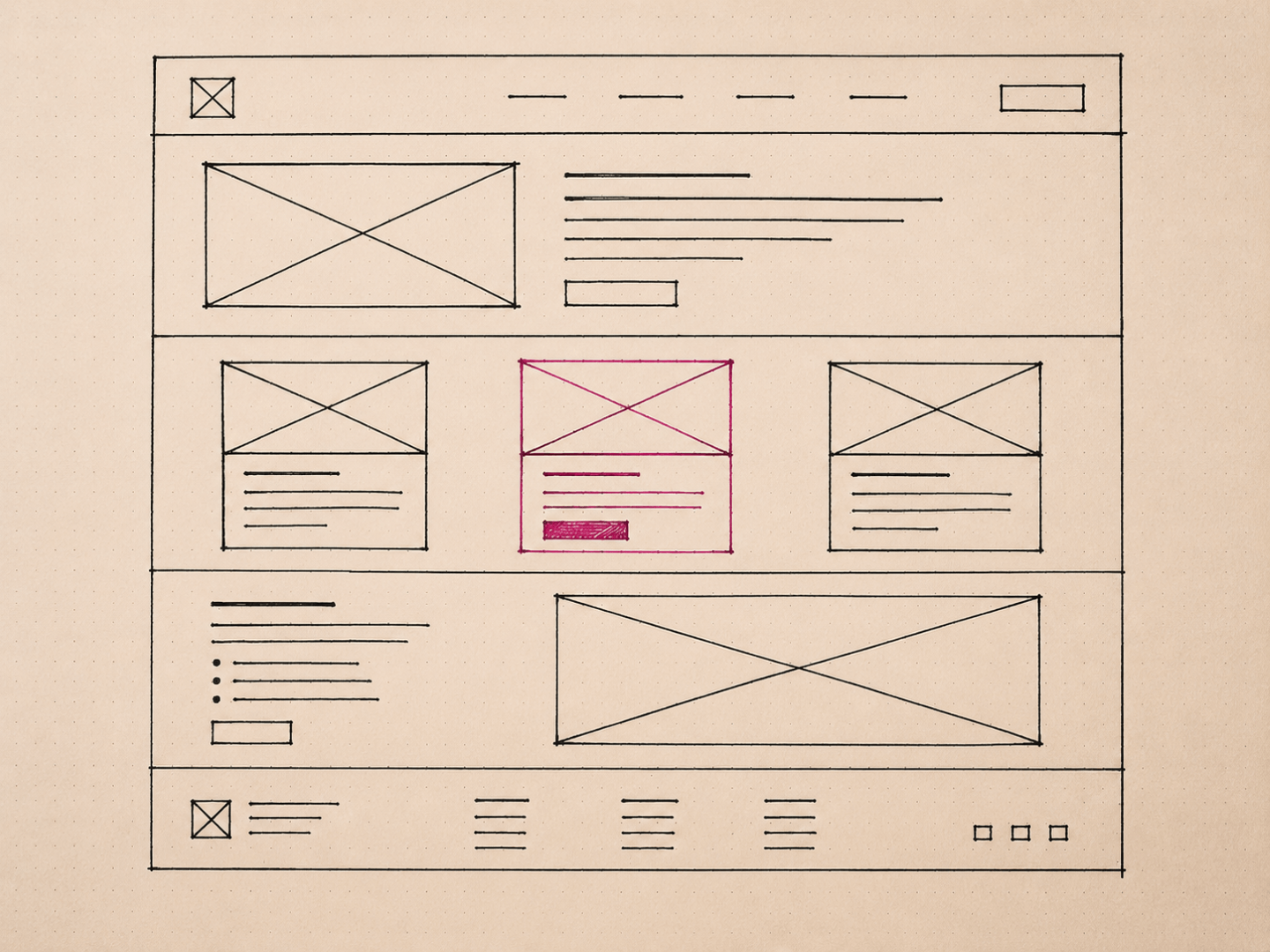
- Web design is the practice of planning how a website looks, feels, and functions. It is distinct from web development, which builds the technical systems that make a site run.
- Core elements include layout, typography, colour, navigation, imagery, and how a visitor is guided toward an action.
- Good web design is judged by usability and clarity as much as visual style. A website that looks polished but confuses visitors has failed at its job.
- Graphic design and web design overlap most clearly in branding. Logos, colour palettes, and typography choices carry across from a business's visual identity into its website.
- Responsive design, ensuring a site works on mobile, tablet, and desktop, is now a baseline expectation rather than an optional extra.
What web design actually involves
At its core, web design is about decision making. Every page involves choices about what a visitor sees first, how the layout guides their eye, what colours and fonts represent the brand, and how easy it is to find the next step, whether that's a product page, a contact form, or a piece of content. A web designer works through these decisions using established principles such as visual hierarchy, whitespace, and consistency, so the finished site feels intentional rather than assembled from parts.
Web design also has a functional dimension that goes beyond aesthetics. Navigation structure, page load speed, and how content adapts across screen sizes are as much a part of the discipline as colour choices, because a site that looks good but loads slowly or breaks on mobile has failed at the design brief, not just the build.
Web design vs web development
Web design and web development are often used interchangeably, but they describe different stages of building a website and usually different skill sets. Design is concerned with how a site looks, feels, and guides a visitor: the layout, the visual identity, the user experience. Development is the technical work of turning that design into a functioning website, writing code, setting up a content management system, and handling the backend systems that make the site run.
Some practitioners work across both, but the disciplines draw on different expertise. Design draws on visual communication and user experience thinking. Development draws on programming and systems knowledge. Design Junction's focus is on the design side, the visual and strategic thinking behind a website, not the coding or technical build.
Where graphic design and web design overlap
Web design and graphic design share a foundation but apply it differently. Both rely on the same visual principles: typography, colour theory, layout, and hierarchy. The overlap is clearest in branding. A business's logo, colour palette, and typography choices, the outputs of its graphic design and brand identity work, become the visual language a website is built around. A web designer working without a defined brand identity is essentially designing blind, guessing at colours and fonts instead of extending an established system.
Where the two diverge is in application. Graphic design produces static assets: logos, print material, packaging, marketing collateral. Web design applies visual principles to an interactive, responsive medium, one where the same page might be viewed on a small phone screen or a large monitor, and where a visitor's actions, scrolling, clicking, filling in a form, are part of the design problem, not just the visual output.
Core elements of a well-designed website
A well-designed website is built from a consistent set of elements, each doing a specific job rather than existing for decoration. These are the areas a web designer works through on any project:
- Layout and structure: how content is arranged and prioritised on the page.
- Typography: font choices and hierarchy that make content easy to read and scan.
- Colour palette: consistent use of brand colours that supports readability and visual hierarchy.
- Navigation: a menu and site structure that lets visitors find what they need without confusion.
- Responsive design: layouts that adapt cleanly across mobile, tablet, and desktop screens.
- Imagery and visual assets: photography, illustration, or icons used with purpose, not as filler.
- Calls to action: clear next steps placed at the points where a visitor is ready to act.
FAQs
- Is web design the same as web development?
- No. Web design covers how a website looks and functions from a user's perspective, including layout, visual identity, navigation, and user experience. Web development is the technical work of building that design into a functioning site, including coding and backend systems. The two are related but distinct disciplines, and many practitioners specialise in one or the other.
- Do I need a design background to understand my website's design?
- No, but it helps to know what to look for. Understanding the core elements, layout, typography, colour, navigation, and how they affect usability, gives a business owner enough to brief a designer clearly and judge whether a website is doing its job, even without hands-on design skills.
- How are graphic design and web design connected?
- They share the same visual principles, typography, colour, and hierarchy, but apply them differently. A business's graphic design and brand identity work, its logo, colours, and fonts, typically forms the visual foundation a web designer builds the website around.
Web design rarely works well in isolation from a business's broader brand identity. If you're weighing up a website project, understanding what your brand identity actually covers is a useful starting point before briefing a designer. For a closer look at how to prepare for that conversation, see our guide on how to brief a graphic designer. You can also read more about Design Junction's approach on our About page.